
Tangible Tools: Why Physical Tools Still Matter Today
Tangible tools remain essential despite the rise of digital technology. Learn how physical equipment supports work, education, creativity, safety, and everyday tasks.
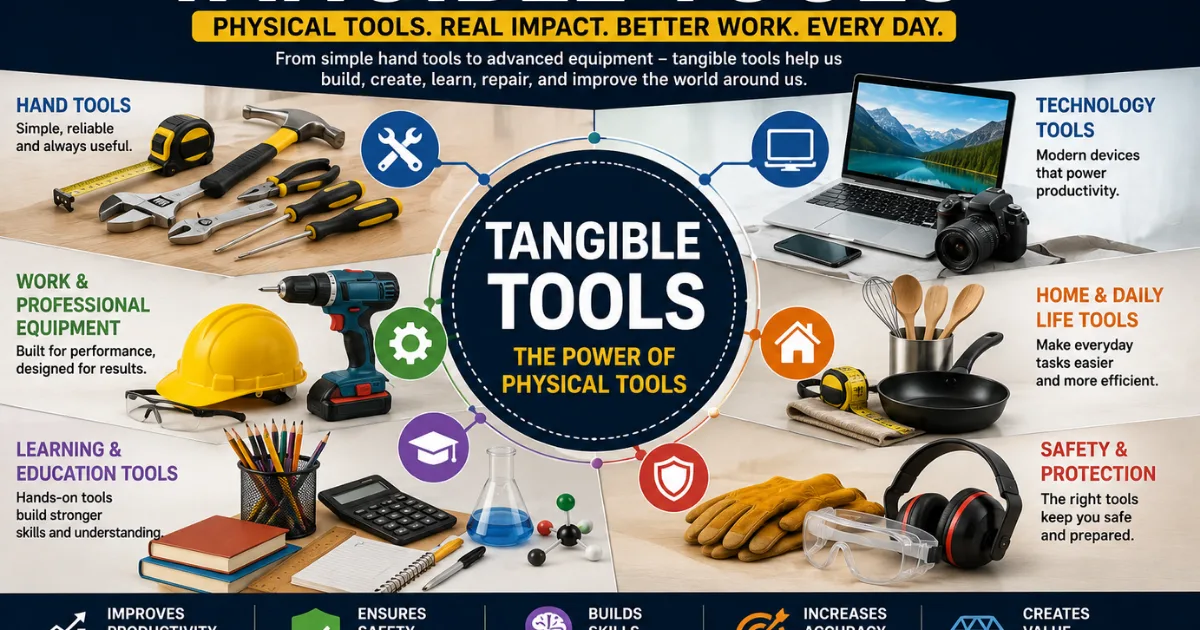
Tangible tools are physical objects people use to complete tasks, solve problems, create products, and make daily work easier. From a hammer to a laptop, these tools turn ideas into visible action. While digital technology gets attention, tangible tools remain important in homes, schools, workshops, offices, farms, hospitals, and businesses. Understanding their role helps people choose equipment wisely and work safely.
What are tangible tools?
Tangible tools are physical items designed to help people perform a specific job. They can be hand tools, professional equipment, measuring devices, kitchen utensils, medical instruments, or machines.
Examples include:
Hammers, screwdrivers, drills, and saws
Pens, notebooks, rulers, and calculators
Cameras, microphones, and lighting equipment
Gardening equipment and farming machinery
Cooking utensils and food preparation equipment
Laboratory and medical instruments
A tangible tool has a form that can be seen and handled. Its value comes from how well it supports a task.
Why do tangible tools still matter?
They matter because physical action remains essential. A carpenter cannot build a wooden table using ideas alone. A gardener needs equipment to prepare soil. A mechanic needs tools to inspect and repair a vehicle. Even technology-focused workplaces need physical devices to create, test, transport, or maintain products.
Good equipment improves consistency and can reduce errors or speed up a job. Dependable equipment may also reduce downtime and improve safety.
According to the U.S. Occupational Safety and Health Administration, employers should provide appropriate tools and equipment and keep them in safe working condition (source: OSHA). Safety and proper use matter too.
How are tangible tools used in everyday life?
People use them every day. At home, scissors, kitchen knives, cleaning equipment, ladders, and repair kits are practical examples. In schools, students use books, art supplies, laboratory equipment, and writing instruments. In workplaces, employees may use computers, printers, machinery, protective equipment, or inspection devices.
Tangible tools can support four basic needs:
Creating something new.
Repairing or maintaining something.
Measuring or checking information.
Making a repeated task easier.
Their physical design also makes their purpose easier to understand.
What makes a good tangible tool?
A good tool should match the task, the user, and the working environment. Price alone does not determine quality; an expensive item may be unnecessary, while a cheap one may fail under heavy use.
When choosing equipment, consider:
Durability and material quality
Comfort and ease of handling
Safety features
Size, weight, and portability
Maintenance requirements
Replacement parts or accessories
Long-term value
Start with the job, then consider frequency of use and working conditions.
Are tangible tools better than digital tools?
Not necessarily. Physical and digital tools often work best together. A digital application may organize a project, while a physical notebook can help someone sketch ideas. A computer can analyze measurements, but a physical instrument may be needed to collect them.
Digital tools are excellent for communication, automation, storage, and analysis. Tangible tools are valuable for physical work, direct control, construction, measurement, and hands-on learning. Modern systems often combine both.
How can businesses choose the right tools?
Businesses should connect equipment purchases to real operational needs. Buying more equipment does not automatically create better results. A company can waste money on unused machines, duplicate supplies, or tools that employees find difficult to operate.
A simple process works:
Identify the task or problem.
Ask employees what equipment they need.
Compare quality, cost, safety, and maintenance.
Test important equipment when possible.
Track performance after purchase.
Replace items when they no longer meet requirements.
This makes equipment spending more practical.
What role do tangible tools play in learning?
Hands-on tools can make abstract ideas easier to understand. Students may learn measurement by using rulers, geometry equipment, or laboratory instruments. Art students develop skills through physical materials. Technical learners can understand machines more clearly when they inspect components and practice with real equipment.
Hands-on learning also builds problem-solving skills because learners observe, adjust, and try again.
For readers interested in related workplace ideas, [insert related article link here] can connect this topic with productivity, digital systems, or practical business strategy.
How should tangible tools be maintained?
Regular maintenance keeps equipment useful and safe. Users should follow manufacturer instructions, inspect items for damage, clean them appropriately, and store them in suitable conditions. Worn parts should be repaired or replaced before they create larger problems.
A basic maintenance routine may include:
Cleaning after use
Checking for cracks, loose parts, or wear
Lubricating equipment when required
Storing tools away from moisture or extreme conditions
Keeping safety guards in place
Recording important repairs or inspections
Small habits can extend useful life and prevent accidents.
Why will tangible tools remain important?
Technology changes quickly, but physical work remains. Construction, healthcare, manufacturing, agriculture, education, home improvement, and countless other activities still depend on equipment that people can physically use.
The future will combine physical and digital systems. Sensors may monitor machines. Connected devices may provide instant information. Automation may assist workers. Tools will still turn ideas into action.
The lesson is simple: tangible tools are not outdated simply because digital technology is growing. They remain essential because people still build, repair, measure, create, learn, and work in the physical world. Choosing the right equipment, using it correctly, and maintaining it well can save time, improve results, and support safety. Whether the tool is a basic household item or advanced professional equipment, its value comes from solving a problem effectively. That practical purpose keeps tangible tools relevant in a changing world.
FAQs:
What are tangible tools?
Tangible tools are physical objects designed to help people complete specific tasks or solve practical problems.
Why are tangible tools important?
They support physical work, learning, repairs, construction, creativity, measurement, and many everyday activities.
What are examples of tangible tools?
Examples include hammers, drills, rulers, kitchen utensils, cameras, laboratory equipment, and professional machinery.
Are tangible tools better than digital tools?
Neither is always better because physical and digital tools often work together to produce better results.
How should tangible tools be maintained?
Clean, inspect, store, and repair tools regularly according to their intended use and manufacturer guidance.
Comments (0)
Be the first to comment.
Related stories
 Tech & AI
Core Purpose: How a Clear Reason Can Shape Success
Core purpose gives people and organizations a clear sense of direction. Learn how it influences decisions, leadership, careers, business strategy, and long-term success.
 Tech & AI
Intangible Systems: How Invisible Structures Shape Our World
Intangible systems may be invisible, but they influence businesses, technology, communication, and everyday decisions. Discover how these systems work and why they matter.
 Tech & AI
Practical Thinking: Simple Ideas That Actually Work in Real Life
Practical thinking helps turn knowledge into action. Discover simple ways to make better decisions, build useful skills, and handle everyday challenges.