
Practical Thinking: Simple Ideas That Actually Work in Real Life
Practical thinking helps turn knowledge into action. Discover simple ways to make better decisions, build useful skills, and handle everyday challenges.
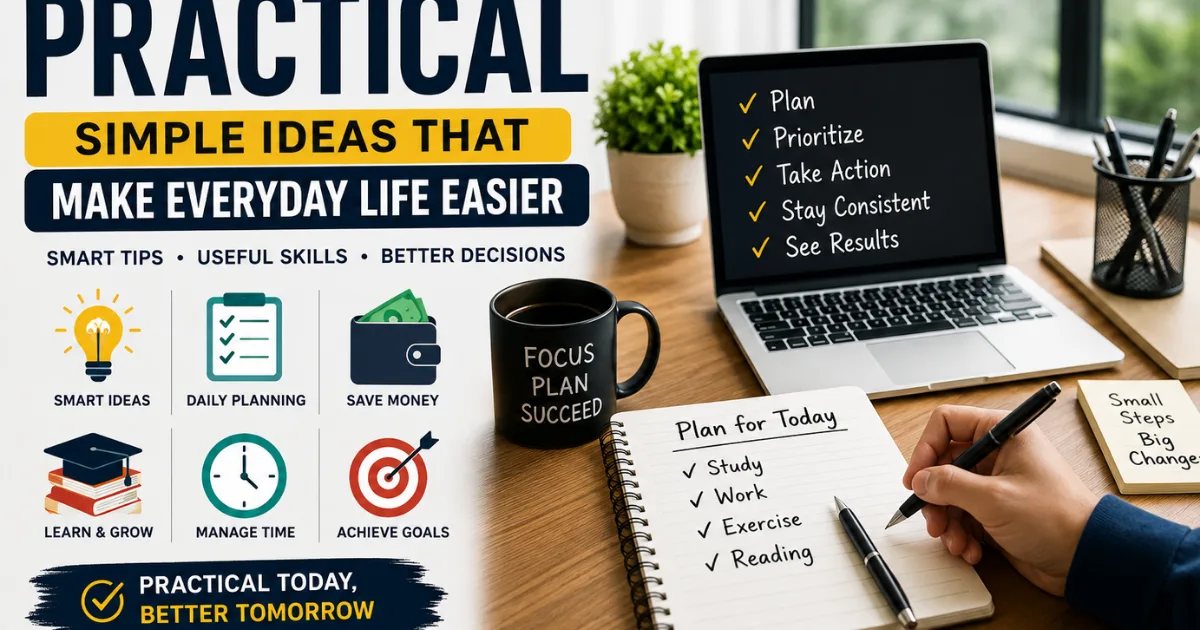
The word practical sounds simple, but it carries a powerful idea: usefulness in real life. In a world full of advice, trends, and complicated choices, practical thinking helps people focus on what actually works. Whether you are planning a career, managing money, improving a home, learning a skill, or solving an everyday problem, a practical approach can turn a good idea into a useful result. This article explains what practical means, why it matters, and how anyone can use practical thinking to make smarter decisions.
What does practical mean?
Practical means something that is useful, realistic, and suitable for a real situation. A practical idea is not only interesting on paper; it can also be used successfully in everyday life.
For example, a complicated plan may look impressive, but a simple plan that people can follow may be more practical. Practical choices usually consider time, cost, available resources, personal needs, and the result a person wants.
Why is practical thinking important today?
Practical thinking is especially valuable when people face limited time, money, or information. Online platforms provide endless opinions, but not every recommendation fits every person. Practical thinking encourages readers to ask a basic question: “Will this actually work for me?”
This mindset can reduce wasted effort. Instead of following every new trend, a person can compare options and choose the one that matches their situation.
Practical thinking also supports flexibility. If a plan does not produce the expected result, the person can adjust it instead of continuing simply because the original idea sounded good.
How can you make more practical decisions?
A practical decision usually starts with a clear goal. Before choosing an option, define what you are trying to achieve. Then look at the resources you have and the limits you must work within.
A simple process can help:
Identify the problem.
Define the desired result.
List realistic options.
Compare cost, time, effort, and risk.
Choose the option that best fits the situation.
Test the decision and improve it if necessary.
What is the difference between practical and theoretical knowledge?
Theoretical knowledge explains ideas, principles, or concepts. Practical knowledge focuses on using those ideas in real situations. Both are valuable, and the strongest learning often combines them.
A student may understand how a process works from a textbook, but practice can reveal challenges that are difficult to notice in theory. A beginner learning cooking, photography, coding, gardening, or a trade develops confidence by applying information repeatedly.
What are examples of practical skills?
Practical skills are abilities that help people complete useful tasks. They can be professional, household, creative, or digital.
Common examples include:
Budgeting and basic money management
Cooking simple meals
Writing professional emails
Using spreadsheets and online tools
Basic home maintenance
Time management
Research and source checking
Communication and problem solving
How can practical advice improve everyday life?
Good practical advice should be clear, realistic, and easy to act on. It should recognize that people have different budgets, schedules, abilities, and goals.
For example, advice about saving money becomes more useful when it offers small steps instead of demanding an unrealistic lifestyle change. Advice about productivity is stronger when it suggests a routine that someone can actually maintain.
When reading online advice, ask:
Who is giving the advice?
What evidence supports the claim?
Does it fit my situation?
What are the possible drawbacks?
Can I test it on a small scale first?
These questions help separate useful guidance from attractive but impractical promises.
Can practical thinking help with work and careers?
Yes. Practical thinking can help people choose skills that employers value and identify ways to improve their performance. Instead of focusing only on job titles, workers can examine the actual tasks, tools, and abilities required for a role.
Employers also value people who can solve problems, communicate clearly, manage priorities, and turn instructions into results. These are practical abilities because they directly affect workplace performance.
The World Economic Forum’s Future of Jobs research regularly highlights skills such as analytical thinking, resilience, flexibility, and problem solving as important in changing workplaces (source: World Economic Forum).
Why should practical information be checked carefully?
Practical does not automatically mean correct. A tip can sound useful while still being outdated, incomplete, or unsuitable for a particular situation. This is especially important for health, finance, legal matters, safety, and technical decisions.
Reliable information should be checked against trustworthy sources. Look for official guidance, qualified experts, original research, or established organizations. When a claim could affect your money or wellbeing, avoid relying on one social media post or anonymous comment.
[insert related article link here] can direct readers to a related guide about evaluating online information and making informed choices.
How can you become more practical?
Start small. When facing a problem, avoid asking only what sounds exciting. Ask what is realistic, useful, affordable, and sustainable.
Keep notes about what works. Learn from mistakes without treating them as failures. Ask experienced people for specific advice. Break large goals into manageable actions.
A practical mindset also leaves room for creativity. Being practical does not mean choosing the cheapest or easiest option every time. It means understanding the situation and selecting an approach that has a reasonable chance of producing the desired result.
What is the biggest lesson about practical living?
The biggest lesson is simple: useful ideas matter most when they can create real value. Practical thinking helps people connect knowledge with action, avoid unnecessary complexity, and make decisions based on real conditions.
It does not promise perfect results. Instead, it encourages testing, learning, adjusting, and moving forward.
In everyday life, that can make a meaningful difference. That balance makes practical thinking useful at home, at work, and in planning. A practical choice may not look dramatic, but small useful decisions can save time, reduce stress, improve skills, and build confidence. The goal is not to make every decision perfectly. The goal is to make decisions that work in the real world and improve with experience.
FAQs:
What does practical mean?
Practical means useful, realistic, and suitable for a real-life situation.
Why is practical thinking important?
Practical thinking helps people make realistic decisions based on their needs, resources, time, and goals.
What are examples of practical skills?
Budgeting, cooking, communication, time management, research, technology, and problem solving are practical skills.
How can I become more practical?
Start with realistic goals, compare your options, test ideas, learn from results, and adjust when necessary.
What is the difference between practical and theoretical knowledge?
Theoretical knowledge explains concepts, while practical knowledge focuses on applying those concepts in real situations.
Comments (0)
Be the first to comment.
Related stories
 Tech & AI
Tangible Tools: Why Physical Tools Still Matter Today
Tangible tools remain essential despite the rise of digital technology. Learn how physical equipment supports work, education, creativity, safety, and everyday tasks.
 Tech & AI
Core Purpose: How a Clear Reason Can Shape Success
Core purpose gives people and organizations a clear sense of direction. Learn how it influences decisions, leadership, careers, business strategy, and long-term success.
 Tech & AI
Intangible Systems: How Invisible Structures Shape Our World
Intangible systems may be invisible, but they influence businesses, technology, communication, and everyday decisions. Discover how these systems work and why they matter.