Core Purpose: How a Clear Reason Can Shape Success
Core purpose gives people and organizations a clear sense of direction. Learn how it influences decisions, leadership, careers, business strategy, and long-term success.
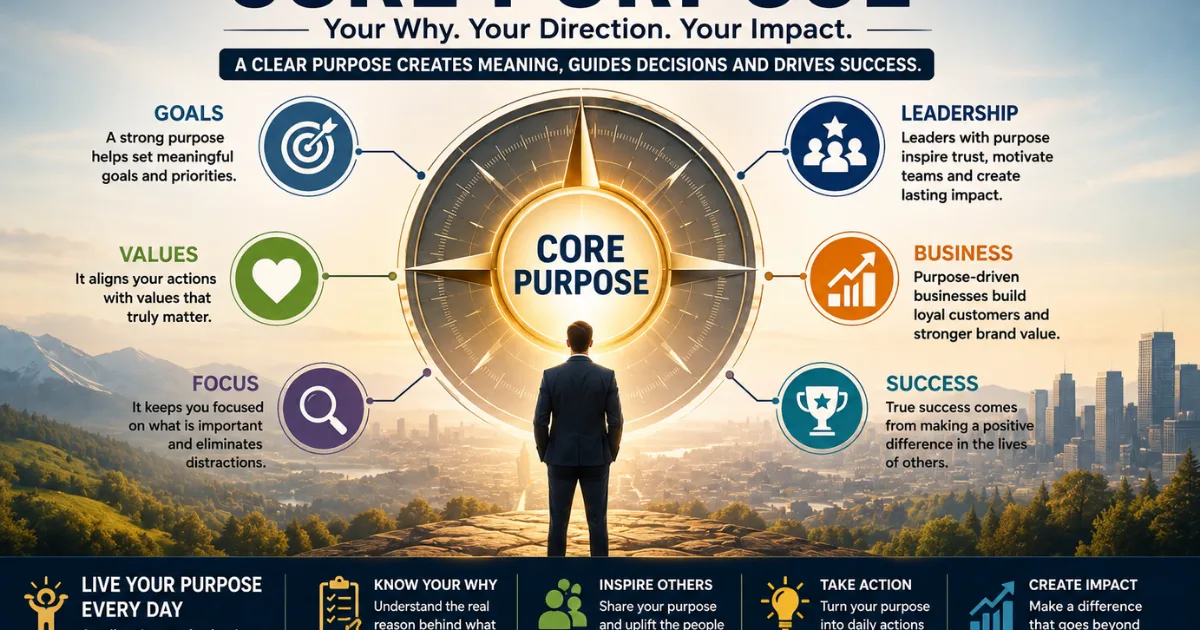
A Core purpose gives a person, team, or organization a clear reason for existing beyond making money or completing daily tasks. It answers a simple but powerful question: “Why do we do what we do?” In a busy world, that answer can guide decisions when priorities compete. A strong purpose can connect everyday work to a larger outcome, helping people understand what matters and where their effort should lead. It does not need to sound grand. It needs to be meaningful, believable, and useful when real choices have to be made.
What is a core purpose?
A core purpose is the central reason an organization or individual exists. It describes the lasting contribution they want to make rather than a short-term target. A goal may be to increase sales by 20 percent, while purpose explains why serving customers matters in the first place.
For a company, purpose can influence products, hiring, customer service, partnerships, and culture. For an individual, it can shape career choices, learning, relationships, and priorities.
Why does core purpose matter?
Purpose matters because people often make better choices when they understand the bigger reason behind their work. Without direction, teams can become focused on busywork, short-term numbers, or whatever problem appears first.
A clear purpose can help an organization:
Set priorities when resources are limited.
Connect employees and customers.
Keep decisions consistent during change.
Create shared direction.
It should not replace strategy. Instead, it gives strategy a meaningful foundation.
How is purpose different from a mission or vision?
These terms are related, but they are not identical. Core purpose describes why an organization exists. A mission usually explains what it does and for whom. A vision describes the future it wants to create.
A simple example makes the difference clearer. Imagine a company that helps small businesses manage their finances. Its purpose might be to help entrepreneurs build greater financial confidence. Its mission could be to provide simple accounting tools and guidance. Its vision might be a world where every small business owner can make informed financial decisions.
How do you find your core purpose?
Finding purpose takes honest reflection. Start by looking beyond products, job titles, or revenue. Ask what positive change would disappear if your work stopped tomorrow.
Useful questions include:
Who benefits from what we do?
What problem are we truly trying to improve?
What do people consistently value about our work?
What would we continue caring about even if trends changed?
What difference do we want our work to make?
What makes a strong purpose statement?
A strong statement is clear, meaningful, and durable. It should be easy enough for an employee, customer, or reader to understand without a dictionary.
Good purpose statements usually avoid vague promises such as “being the best” or “leading the industry.” Those describe ambition, not necessarily reason for existence.
A useful statement should be:
Short enough to remember.
Specific enough to guide choices.
Broad enough to survive changing products.
Authentic enough that people can believe it.
Focused on meaningful impact.
Can core purpose improve business performance?
It can, especially when purpose is connected to real decisions rather than used only in marketing. Employees may be more engaged when they understand how their work contributes to something meaningful. Customers may also respond positively when a company consistently delivers on a clear promise.
Strong products, pricing, operations, customer service, and financial management still matter. Purpose works best as a guiding layer that connects these activities.
Research and practical guidance from organizations such as the Harvard Business Review have discussed how purpose can influence organizational alignment, leadership, and employee motivation (source: Harvard Business Review). The important point is that purpose becomes valuable when it shapes behavior.
How can leaders use purpose in everyday decisions?
Leaders can make purpose practical by connecting it to ordinary choices. During meetings, teams can ask whether a proposed project supports the organization’s reason for existing. During hiring, managers can consider whether candidates understand and support the organization’s values.
This approach turns purpose from a poster on a wall into a working decision tool.
What mistakes should organizations avoid?
One common mistake is writing a statement that sounds impressive but means very little. Another is copying language from competitors. A third is promoting a purpose publicly while behaving differently internally.
Finally, leaders should not expect employees to believe a purpose that daily policies contradict. If a company says it values customers but rewards speed at the expense of service, people notice the gap quickly.
Can individuals have a core purpose too?
Yes. Individuals can use purpose to make personal and career decisions. It does not have to be a single lifelong mission. Instead, it can describe the kind of contribution or impact a person wants to make.
Someone may want to teach, create, solve problems, support others, build useful products, or make complex information easier to understand. Knowing that preference can help when choosing jobs, projects, skills, and commitments.
[insert related article link here] can guide readers toward another article about personal development, goal setting, or meaningful career planning.
Why will purpose remain important in the future?
Technology is changing jobs, products, and communication at remarkable speed. Artificial intelligence and automation may transform many tasks, but they do not remove the need to decide what those tasks should achieve.
That is why core purpose can become even more useful. When tools change quickly, people need stable principles for deciding where to apply those tools.
When that answer is clear, teams can communicate better, leaders can make more consistent choices, and individuals can spend more energy on work that feels worthwhile. In practice, purpose becomes powerful when people can see it consistently in daily choices, priorities, communication, leadership, and the results they deliver. Purpose cannot solve every problem, but it can provide steady direction when everything else is changing. In the end, a meaningful core purpose connects daily actions with a reason that lasts beyond a single project or result.
FAQs:
What is a core purpose?
A core purpose is the central reason a person or organization exists beyond short-term goals or financial results.
Why is core purpose important?
It provides direction and helps people make consistent decisions based on meaningful priorities.
What is an example of a core purpose?
A company might have a purpose focused on helping customers solve important problems or improve their lives.
How do you create a purpose statement?
Identify who you serve, what problem you address, and what meaningful difference you want to make.
Can a person have a core purpose?
Yes, individuals can use a core purpose to guide career choices, personal goals, learning, and meaningful contributions.
Comments (0)
Be the first to comment.
Related stories
 Tech & AI
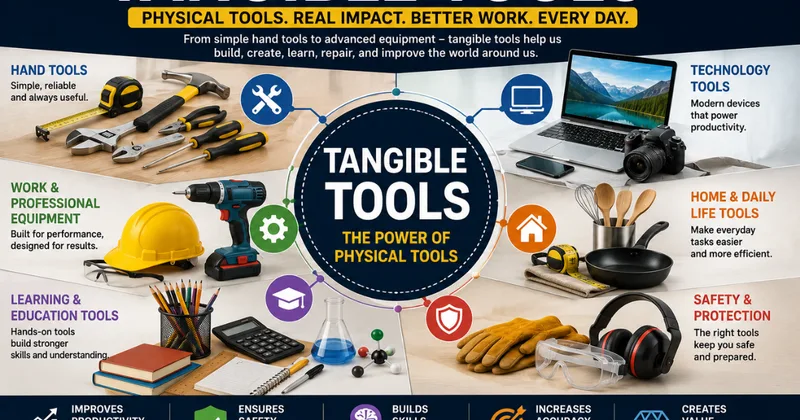
Tangible Tools: Why Physical Tools Still Matter Today
Tangible tools remain essential despite the rise of digital technology. Learn how physical equipment supports work, education, creativity, safety, and everyday tasks.
 Tech & AI
Intangible Systems: How Invisible Structures Shape Our World
Intangible systems may be invisible, but they influence businesses, technology, communication, and everyday decisions. Discover how these systems work and why they matter.
 Tech & AI
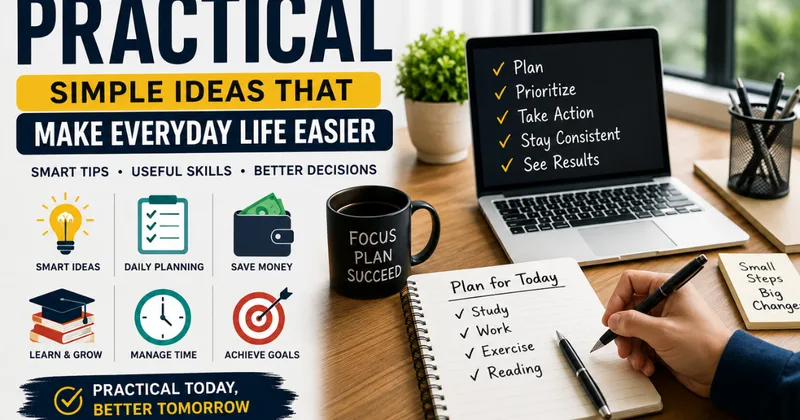
Practical Thinking: Simple Ideas That Actually Work in Real Life
Practical thinking helps turn knowledge into action. Discover simple ways to make better decisions, build useful skills, and handle everyday challenges.