
Intangible Systems: How Invisible Structures Shape Our World
Intangible systems may be invisible, but they influence businesses, technology, communication, and everyday decisions. Discover how these systems work and why they matter.
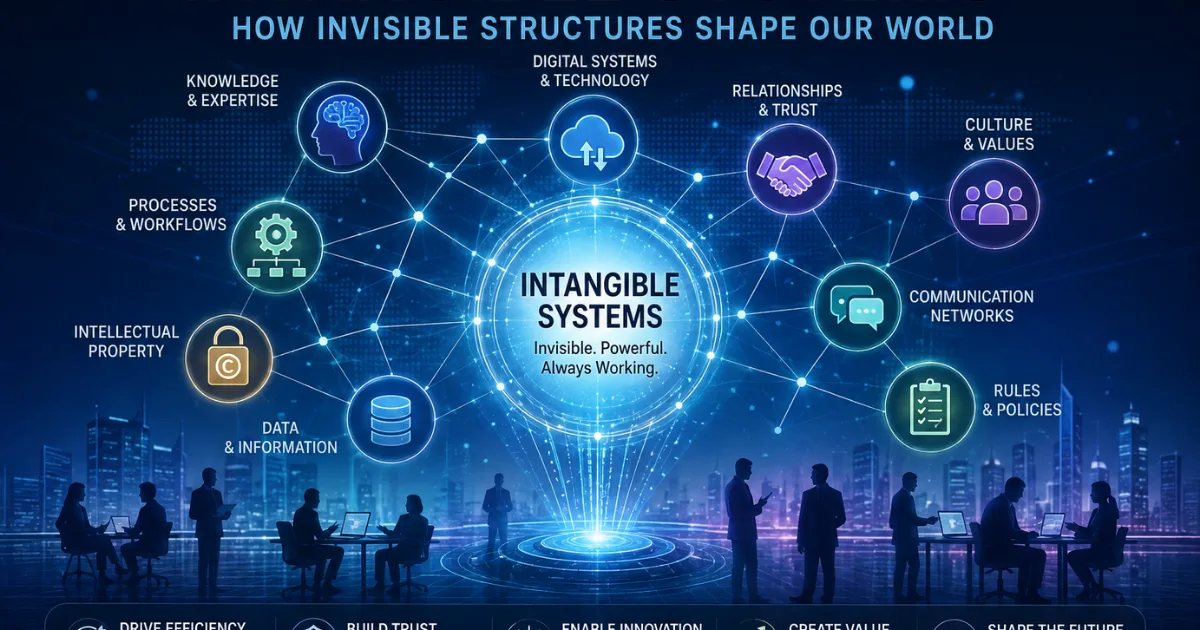
Intangible systems are all around us, even when we cannot touch or see them. They include rules, relationships, processes, knowledge networks, digital structures, cultural habits, and ways of organizing information. Unlike a machine or building, an intangible system has no physical shape. Yet it can strongly influence how a company works, how people communicate, and how communities make decisions. Understanding intangible systems is becoming increasingly important as modern life depends more on information, software, trust, and connected services. They also shape experiences that customers and employees may take for granted, such as reliable service, clear communication, fair treatment, and quick access to information. Because these systems are often hidden, problems may appear first as frustration, delays, or inconsistent results. Before leaders identify their true cause.
What are intangible systems?
An intangible system is an organized structure that creates value or produces results without existing as a physical object. It may be built from ideas, information, procedures, relationships, software logic, or shared expectations.
For example, a company’s workflow is intangible. Employees follow steps, communicate with one another, use rules, and make decisions, but the workflow itself cannot be held in your hands. A brand’s reputation is another example. Customers may trust a company because of past experiences, but that trust is not a physical product.
In simple terms, intangible systems are systems that work through invisible resources and connections.
Why are intangible systems important today?
Intangible systems matter because many modern organizations depend on things that cannot be measured like equipment or inventory. A business may own computers and offices, but its success can also depend on knowledge, customer trust, employee skills, intellectual property, and internal processes.
Practical examples include:
Knowledge and expertise
Organizational culture
Digital platforms and software processes
Customer relationships
Intellectual property
Communication networks
Rules and operating procedures
How do intangible systems work?
Intangible systems usually work by connecting people, information, decisions, and actions. They create patterns that guide behavior.
Consider an online shopping platform. The physical products are tangible, but much of the customer experience depends on invisible systems. Search algorithms organize products. Payment processes verify transactions. Recommendation tools suggest items. Customer accounts store information. Review systems create social trust.
None of these systems needs to be a physical object to influence what happens. Their impact comes from the way different parts interact.
What are examples of intangible systems in business?
Businesses use intangible systems every day, often without calling them by that name. A company’s hiring process, training program, customer service policy, and communication structure are all examples.
A business may also have systems for:
Managing customer information.
Sharing knowledge between employees.
Protecting intellectual property.
Measuring performance.
Handling complaints.
Developing new products.
Making financial decisions.
These systems can become valuable assets because they help an organization repeat successful actions. Two companies may have similar equipment but achieve different results because their people, knowledge, processes, and relationships are organized differently.
Are digital technologies part of intangible systems?
Yes. Digital technology has made intangible systems more visible and more important. Software applications, cloud platforms, databases, algorithms, and automated workflows can coordinate enormous amounts of activity without requiring a physical structure for every action.
The phone is tangible, but the rules, software logic, security procedures, and data connections behind a banking service form an intangible system.
How do intangible systems create value?
They create value by helping people use knowledge and resources more effectively. A useful system can reduce mistakes, save time, strengthen relationships, or make better information available at the right moment.
A company’s reputation can attract customers. Employee knowledge can improve products. A well-designed process can lower operating costs. A strong network can create new opportunities.
Research from the Organisation for Economic Co-operation and Development highlights the growing economic importance of knowledge-based assets, innovation, data, and digital technologies (source: OECD). These trends show why businesses increasingly compete through resources that are difficult to see but powerful in practice.
What are the challenges of intangible systems?
The biggest challenge is that intangible systems can be difficult to measure and manage. A company can count desks or computers, but it may struggle to calculate the exact value of trust, knowledge, culture, or a reliable process.
Another challenge is fragility. If important knowledge exists only in one employee’s memory, the organization can face problems when that person leaves. If a process is poorly documented, mistakes may become common.
Common risks include:
Poor communication
Outdated information
Weak cybersecurity
Loss of organizational knowledge
Confusing procedures
Lack of accountability
Strong organizations review these systems regularly and improve them as needs change.
How can organizations improve intangible systems?
Improvement begins with understanding how work actually happens. Leaders can map important processes, identify information gaps, document valuable knowledge, and ask employees where delays or confusion occur.
Practical steps include:
Write down important procedures.
Train employees consistently.
Keep information organized.
Review digital systems regularly.
Protect sensitive data.
Encourage useful feedback.
Measure results instead of activity alone.
[insert related article link here] can help readers explore another guide about digital transformation, business processes, or modern organizational strategy.
Why will intangible systems matter even more in the future?
As economies become more digital, intangible systems are likely to play an even larger role. Companies increasingly depend on data, software, intellectual property, specialized skills, online communities, and customer trust.
Artificial intelligence may accelerate this shift by turning information into automated decisions and services.
The key lesson is simple: invisible does not mean unimportant. An intangible system may not occupy physical space, but it can shape outcomes across an entire organization or community.
Understanding these systems helps people see what really makes modern services work. From a company’s culture to a digital platform’s algorithms, many of the structures guiding daily life are intangible. When these systems are designed carefully, they can create efficiency, trust, innovation, and lasting value. When ignored, they can create confusion and risk. That makes intangible systems a practical topic for businesses, technology leaders, employees, and anyone trying to understand how modern organizations operate.
FAQs:
What are intangible systems?
Intangible systems are organized structures based on information, relationships, processes, knowledge, software, or shared expectations.
Why are intangible systems important?
They help organizations and people manage information, improve processes, build trust, and create value without relying only on physical assets.
What are examples of intangible systems?
Examples include company culture, digital platforms, workflows, knowledge networks, customer relationships, and intellectual property.
How do intangible systems create value?
They create value by improving efficiency, reducing mistakes, supporting innovation, strengthening relationships, and helping people use information effectively.
Will intangible systems become more important?
Yes, increasing dependence on digital technology, data, knowledge, software, and online networks is making intangible systems increasingly important.
Comments (0)
Be the first to comment.
Related stories
 Tech & AI
Tangible Tools: Why Physical Tools Still Matter Today
Tangible tools remain essential despite the rise of digital technology. Learn how physical equipment supports work, education, creativity, safety, and everyday tasks.
 Tech & AI
Core Purpose: How a Clear Reason Can Shape Success
Core purpose gives people and organizations a clear sense of direction. Learn how it influences decisions, leadership, careers, business strategy, and long-term success.
 Tech & AI
Practical Thinking: Simple Ideas That Actually Work in Real Life
Practical thinking helps turn knowledge into action. Discover simple ways to make better decisions, build useful skills, and handle everyday challenges.