
Ronnie McNutt: The Story Behind the Viral Livestream and Its Lasting Impact
Ronnie McNutt’s death in 2020 became a major online safety story after a livestream was repeatedly reposted across social media. Here is what happened and why the case still matters.
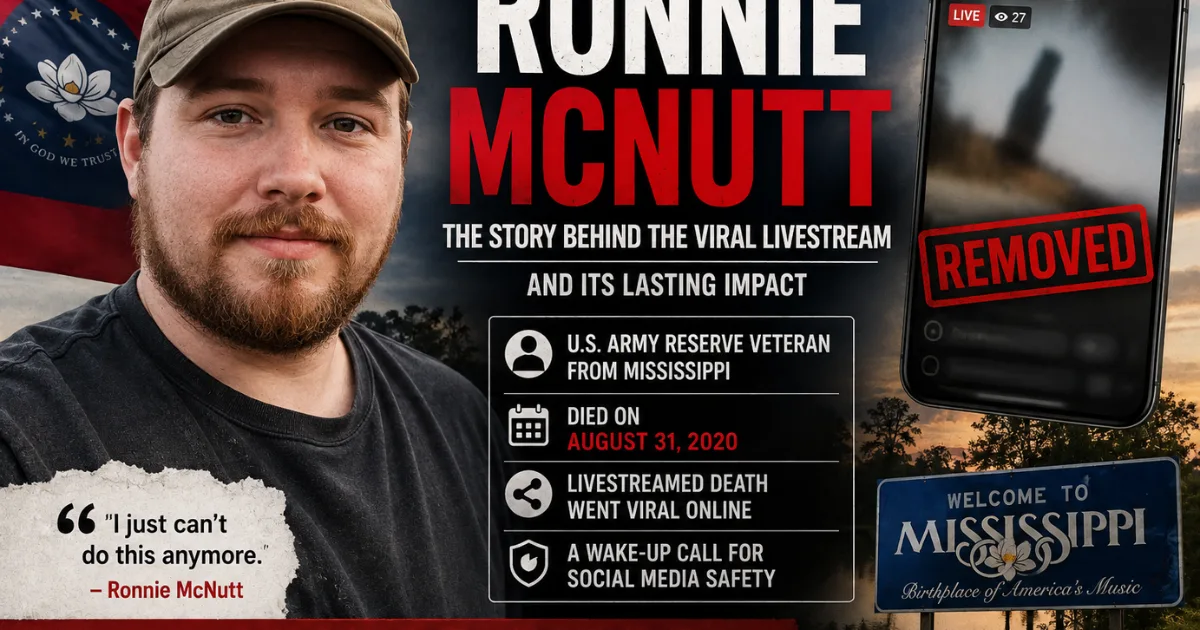
The name Ronnie McNutt became widely known online after a deeply disturbing 2020 livestream was copied and repeatedly reposted across social media. McNutt was a 33-year-old U.S. Army Reserve veteran from Mississippi whose death sparked debate about suicide prevention, platform moderation and the responsibilities of people who share harmful content. This article avoids the footage and explains who McNutt was, what happened afterward, and why the story matters.
Who was Ronnie McNutt?
Ronnie McNutt was a Mississippi resident, Army Reserve veteran and Toyota plant worker. He had served in Iraq and was known by friends as someone who enjoyed talking with people online. His friend Joshua Steen later described him as a regular livestreamer who sometimes used social media to connect with others.
Reports discussed McNutt’s struggles with depression and post-traumatic stress symptoms after military service. These details provide context, but they should not be treated as a single explanation for his death. Suicide is complex.
What happened to Ronnie McNutt?
McNutt died by suicide on August 31, 2020, during a Facebook Live broadcast from his home in New Albany, Mississippi. Police were contacted during the incident, while friends also tried to get help and alert the platform.
Because the event was livestreamed, a recording remained available long enough for viewers to copy it. The footage was later reposted on other platforms, where it reached people who had not searched for it and did not expect to see disturbing material.
Responsible reporting should avoid describing the method or reproducing the footage. A person died, and his death became an online spectacle without his family’s consent.
Why did the Ronnie McNutt video spread online?
The footage spread because users downloaded, reposted and reshared copies across several platforms. Some posts were presented with misleading captions or hidden behind unrelated-looking content. That made it especially difficult for users to avoid.
Forbes reported in September 2020 that McNutt’s friend Joshua Steen believed Facebook could have acted sooner after he and others reported the livestream. Facebook said it removed the original video on the day it was posted and later said it was reviewing how the livestream could have been removed faster. (source: Forbes)
The incident became an example in discussions about automated moderation. Platforms must balance speed, privacy, context and safety when harmful material spreads faster than human reviewers can respond.
Did social media platforms remove the footage?
Platforms eventually removed the original broadcast and worked to limit copies, but reposts continued to appear. TikTok said its systems were detecting and removing clips that violated its rules against content depicting, praising or promoting suicide.
Once a video is copied, removing the original does not automatically remove every duplicate. Users can also disguise harmful clips, upload them to new accounts or move them between services.
The episode showed why reporting systems, automated detection and human review all matter. It also showed why ordinary users have an important role: sharing, commenting on or searching for shocking footage can increase its reach.
Why is Ronnie McNutt still discussed today?
The case remains relevant because it sits at the intersection of mental health, veterans’ wellbeing and internet culture. It also became part of a broader debate about whether social networks can respond quickly enough when livestreams involve imminent danger.
McNutt’s friends and supporters pushed for stronger platform safeguards after his death. The discussion included questions about warning systems, emergency intervention and content removal.
Research and guidance from the American Foundation for Suicide Prevention emphasizes responsible reporting that avoids sensational details and focuses on hope, prevention and help. (source: American Foundation for Suicide Prevention)
[insert related article link here] explains how to report harmful social-media content.
What should people do if they see the Ronnie McNutt footage?
The safest response is simple: do not watch, download, save, comment on or share it. Report the post through the platform’s safety tools and move away from the page.
If someone sends you the footage, you do not need to forward it to warn others. A short message telling them not to share it is enough.
Parents and teachers can explain that shocking content can appear unexpectedly. Children should know they can close the app, tell a trusted adult and report the account without feeling responsible for fixing the situation.
What can we learn from Ronnie McNutt’s story?
The lasting lesson is not the footage. It is the importance of treating people in crisis as human beings rather than internet content.
Friends, relatives and communities can make a difference by taking warning signs seriously, staying connected and encouraging professional support. Online platforms also have a responsibility to design systems that reduce the spread of dangerous material.
The ronnie mcnutt story should therefore be remembered with care. He was more than a viral search term. He was a veteran, friend, family member and member of his Mississippi community.
The story also reminds readers that suicide coverage can influence vulnerable people. Avoiding graphic details, sensational headlines and links to harmful footage is not about hiding the truth. It is responsible reporting.
If you or someone you know is struggling with thoughts of suicide, seek immediate help from a local emergency service or a qualified mental-health professional. Seek local crisis support or emergency help if danger is immediate from trained local professionals.
FAQs:
Who was Ronnie McNutt?
Ronnie McNutt was a Mississippi resident and U.S. Army Reserve veteran whose 2020 death became widely discussed after a livestream was reposted online.
When did Ronnie McNutt die?
McNutt died on August 31, 2020, in New Albany, Mississippi.
Why did the Ronnie McNutt video become viral?
Copies were downloaded and repeatedly reposted across social-media platforms after the original livestream.
Should people search for or share the Ronnie McNutt footage?
No, people should avoid viewing, downloading or sharing the footage and report harmful posts instead.
Why is the Ronnie McNutt case important?
It raised lasting questions about suicide prevention, responsible reporting and how platforms handle harmful livestreamed content.
Comments (0)
Be the first to comment.
Related stories
 International News
How to Increase Facebook Followers: Simple Strategies That Work
Want more Facebook followers without relying on fake accounts? Discover practical strategies for better content, Reels, engagement, collaborations, and organic growth.
 International News
How to Create a Facebook Page: Easy Step-by-Step Guide
Want to build your presence on Facebook? This simple guide explains how to create a Facebook page, complete your profile, publish content, and grow your audience.
 International News
How to Recover a Forgotten Facebook Password: A Simple Guide
Forgot your Facebook password? This simple guide explains how to recover your account, receive a recovery code, reset your password, and protect your account afterward.