
African Hospital: What’s Changing in Healthcare Across Africa?
African hospitals face major pressures, from workforce shortages to limited resources and emergency demands. But new partnerships, training and patient-safety efforts are creating opportunities for improvement.
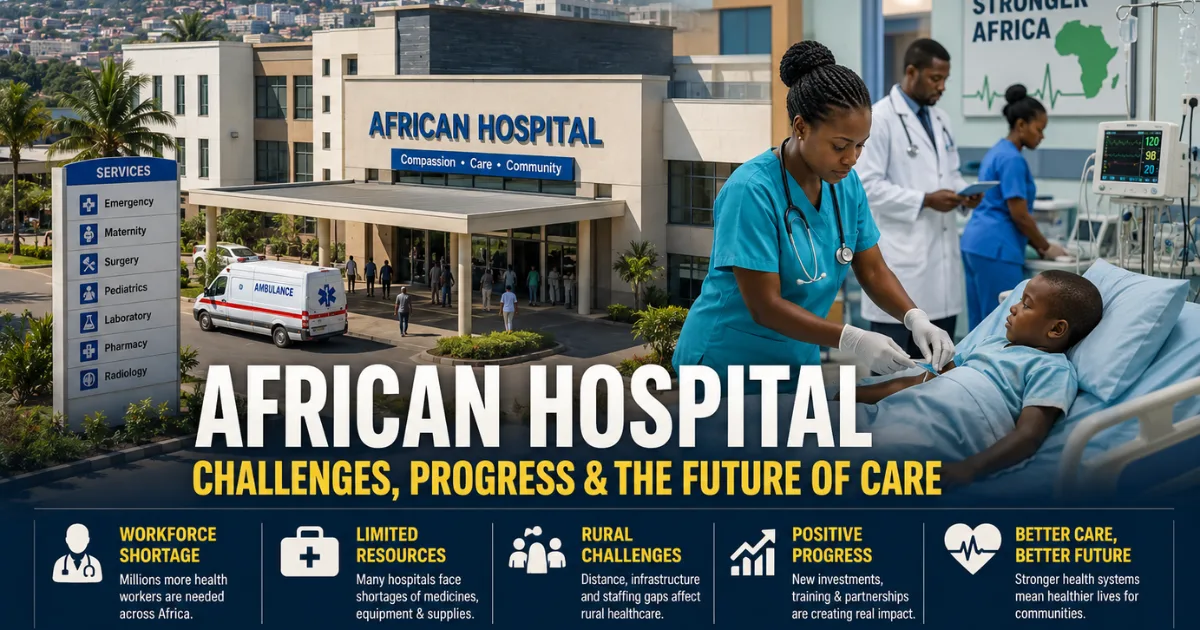
The phrase African hospital can mean very different things, from a large teaching center in Nairobi or Johannesburg to a small rural facility serving thousands of people. Africa has different healthcare systems. Yet a common story is emerging: hospitals are under pressure from staff shortages, limited resources, growing demand and emergencies, while governments and partners are also working on practical ways to improve care.
What is an African hospital like today?
There is no single model. Some hospitals are modern referral centers with specialist doctors, advanced imaging and intensive-care units. Others operate with fewer staff, limited equipment and unreliable supplies.
Hospitals remain central to healthcare because they provide emergency treatment, surgery, maternity care, diagnosis and specialist services. The World Health Organization says hospitals are essential parts of referral networks and universal health coverage, while also stressing the need for reliable infrastructure, technology, supplies and good management. (source: WHO)
Why are African hospitals facing pressure?
The biggest challenges are often connected. A shortage of trained workers can increase waiting times and workload. Limited funding can make it harder to maintain equipment or keep essential medicines available. Rural hospitals may face another problem: attracting and retaining skilled professionals.
WHO’s Regional Office for Africa reported in July 2026 that Africa had expanded health-worker training capacity by 70% since 2018, but the continent could still face a shortage of 5.8 million health workers by 2030. The same report noted that about 27% of trained health professionals were unemployed, showing that training alone does not solve workforce problems. (source: WHO Regional Office for Africa)
The challenge is not simply producing more doctors and nurses. Countries also need jobs, fair distribution, supportive workplaces and long-term retention plans.
How does this affect patients?
For patients, system pressure can become very personal. A shortage of nurses may mean longer waits. A broken machine can delay a diagnosis. A medicine shortage can force families to search elsewhere for treatment.
Research involving healthcare workers in two East African hospitals identified staffing, material conditions and teamwork as major factors affecting patient safety. The study also showed that hospital safety is not only about equipment; communication and professional relationships matter too. (source: BMJ Open)
This is why hospital improvement can involve many small changes. Better hand hygiene, clearer procedures, safer surgery, reliable supplies and stronger teamwork can all make a difference.
Are African hospitals improving?
Yes, and that part of the story is often missed. Hospitals across the continent are developing new training programs, partnerships, digital tools and patient-safety systems.
The WHO’s African Partnerships for Patient Safety program worked with hospitals in Africa and Europe to improve areas such as infection prevention, safe surgery, medication safety and healthcare-worker protection. The program supported hospital partnerships and created practical resources that could be adapted locally. (source: WHO)
Recent research is also examining patient safety in operating rooms across African hospitals. A 2025 systematic review highlighted the continuing importance of infrastructure, staffing, resources and safety culture, while pointing to the need for locally appropriate solutions. (source: Patient Safety in Surgery)
Progress does not mean every hospital has suddenly become well resourced. It means there are real examples of improvement and a growing focus on measuring what works.
What happens during a health emergency?
Emergencies can expose weaknesses quickly. Hospitals may suddenly need more beds, oxygen, medicines, protective equipment and staff. Conflict can make the situation even harder by damaging facilities and preventing workers or patients from reaching care.
Sudan provides a stark current example. WHO says fighting since April 2023 has left 11 million people in need of urgent healthcare, while more than two-thirds of main hospitals in affected areas are out of service. Hospitals that remain open face shortages of staff, supplies, safe water and electricity. (source: WHO Sudan emergency)
Other emergencies, including infectious-disease outbreaks, can place similar pressure on hospitals. The lesson is clear: hospitals need emergency plans before a crisis begins, not after patient numbers surge.
Why is rural healthcare especially important?
A major hospital in a capital city cannot solve every healthcare problem. For many people, the nearest facility may be a rural district hospital or smaller health center.
Rural hospitals can provide essential maternity services, emergency care, malaria treatment, surgery and referrals. Yet they often work with fewer specialists and fewer resources. Oxford researchers have highlighted the difficulty of delivering safe hospital care in rural African settings and are testing practical tools for identifying safety problems.
Strengthening rural hospitals can therefore reduce the distance patients must travel and help prevent treatable conditions from becoming emergencies.
[insert related article link here]
What should governments focus on?
Experts generally point toward several connected priorities:
Train and retain enough health workers.
Improve reliable access to medicines and equipment.
Strengthen electricity, water and sanitation.
Build safer referral systems between facilities.
Measure patient safety and quality of care.
Prepare hospitals for outbreaks, disasters and conflict.
Invest in rural and underserved communities.
WHO has repeatedly emphasized that hospitals work best when they are integrated into wider health systems rather than treated as isolated buildings.
Why does the African hospital story matter globally?
Healthcare challenges in Africa are not only an African concern. Disease outbreaks can cross borders, health-worker migration affects many countries, and international partnerships influence how medical knowledge and resources move around the world.
At the same time, African hospitals are not simply places defined by shortages. They are centers of medical training, research, innovation and community service.
For readers searching “African hospital,” the most useful answer is not a single picture. The continent has thousands of hospitals with different strengths and challenges. The key story is how those facilities are adapting to rising demand while working toward safer, more accessible care.
The future will depend on sustained investment, strong leadership and local solutions. Technology can help, but it cannot replace trained people, dependable infrastructure and trust. A hospital succeeds when patients can reach it, staff can work safely and essential treatment is available when it matters most.
FAQs:
What is an African hospital?
An African hospital is a healthcare facility serving patients in one of Africa’s diverse national or regional health systems.
What are the biggest challenges facing African hospitals?
Major challenges include health-worker shortages, limited resources, infrastructure gaps and rising healthcare demand.
Are African hospitals improving?
Yes, many hospitals are improving through training, partnerships, patient-safety programs and stronger healthcare systems.
Why are rural African hospitals important?
Rural hospitals provide essential care closer to communities that may live far from major cities and specialist centers.
What is the future of African hospitals?
The future depends on sustained investment, trained health workers, reliable infrastructure, strong management and locally appropriate solutions.
Comments (0)
Be the first to comment.
Related stories
 Health
Scallions: The Fresh, Flavorful Ingredient You Should Know
Scallions are more than a simple garnish. Learn how to use, store, grow, and cook this versatile vegetable while discovering its nutritional benefits.
 Health
Home Care Newsletters: What Readers Need to Know
Home care newsletters help families, caregivers, and care professionals stay informed about care, Medicare, safety, policy changes, and useful resources.
 Health
Cardiff Chart: What Pregnant Women Need to Know
The Cardiff chart is a traditional way to record fetal movements during pregnancy. Here is how it works, what the number 10 means, and why reduced movements should not be ignored.