
Japan Gardening News: How Heat and Technology Are Changing Gardens
Japan’s gardening scene is changing quickly as extreme heat, urban green spaces, technology, and traditional garden culture shape new trends across the country in 2026.
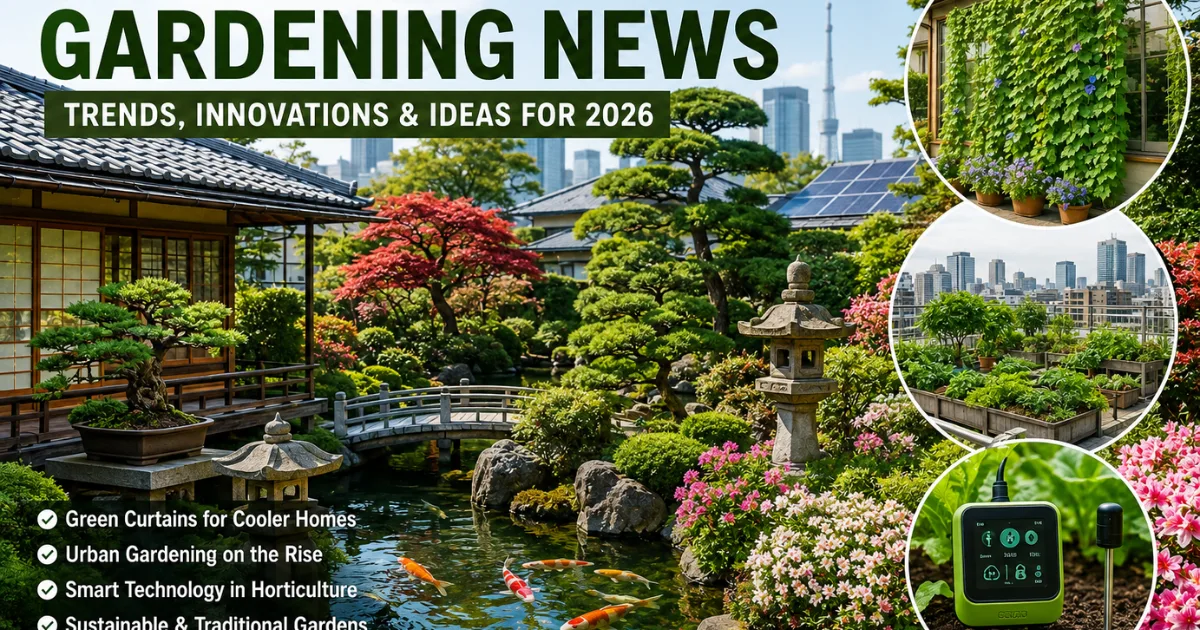
Japan gardening news is drawing fresh attention in 2026 as gardeners, farmers, designers, and city planners adapt to hotter summers while keeping Japan’s famous love of flowers and green spaces alive. From traditional gardens to small balconies and community plots, gardening is becoming part of a bigger conversation about climate, food, health, and urban life. Recent developments also show how technology is entering horticulture, while simple ideas such as shade-growing vines are gaining renewed interest.
What is the latest Japan gardening news?
One of the biggest stories is the pressure that extreme summer heat is placing on plants and people. Japan’s Agriculture, Forestry and Fisheries Ministry has reported serious heat-related effects on crops, including problems with fruit coloring and vegetable production. In 2025, Japan recorded its hottest summer on record, according to ministry information, increasing attention on heat-tolerant varieties and new growing methods.
The issue is not limited to commercial farms. Home gardeners are also facing faster soil drying, leaf damage, pests, and plants struggling during long hot spells.
Why is heat changing the way Japanese gardeners work?
Heat is changing both timing and technique. Farmers are increasingly looking for ways to avoid the hottest hours of the day. A recent Reuters report noted that some Japanese agricultural workers are shifting activities into nighttime to reduce heat exposure and protect crops.
For ordinary gardeners, the lesson is simple: work with the weather instead of fighting it.
Useful approaches include:
Water deeply during appropriate cooler periods rather than constantly wetting the surface.
Use mulch to help soil retain moisture.
Provide temporary shade for sensitive plants.
Choose varieties suited to local conditions.
Check plants regularly for heat stress and pests.
These practical steps can make a major difference during difficult summer conditions.
Are green curtains becoming a bigger gardening trend?
Yes. Green curtains, made by growing climbing plants near windows, are receiving renewed attention as a low-tech way to reduce harsh sunlight. Morning glory and bitter melon are among the plants commonly used for this purpose.
The idea is especially interesting because it combines gardening with climate adaptation. Instead of relying only on mechanical cooling, residents can create living shade around homes, schools, and community spaces.
Recent reporting has highlighted projects using green curtains in areas affected by the Noto Peninsula earthquake. The concept shows how a small garden can have a practical purpose beyond decoration.
Is urban gardening growing in Japan?
Urban gardening remains an important part of Japan’s green-space conversation. The Ministry of Agriculture, Forestry and Fisheries describes urban agriculture as having several roles, including supplying fresh food, providing agricultural experiences, creating open space for disaster preparedness, and offering greenery close to where people live.
Community gardens are particularly useful for people who do not have private yards. They can provide space for vegetables, flowers, learning, and social contact.
A 2026 study published through J-STAGE examined the EDIBLE WAY project in Matsudo and found that street gardening was associated with everyday social interaction, including greetings and short conversations. The findings suggest that even small planted spaces can contribute to neighborhood connections.
What new technology is appearing in Japanese gardening?
Technology is becoming another major theme in Japan gardening news. Companies are testing artificial intelligence, sensors, robotics, and controlled indoor environments to improve cultivation.
This matters because Japan faces a growing shortage of agricultural workers. Recent reporting has described companies using AI and sensors in indoor farming to manage growing conditions and improve efficiency. Such systems can monitor temperature, humidity, light, and other factors that influence plant growth.
For home gardeners, the same trend is appearing in smaller ways. Smart moisture meters, automatic watering systems, weather apps, and LED grow lights can help people make better decisions without turning gardening into a complicated science project.
What does Japan’s horticulture sector look like in 2026?
Japan’s horticulture sector is broad and increasingly connected to research and international collaboration. A new 2026 publication in The Horticulture Journal provides an overview of Japanese horticulture, including major crops, research developments, breeding, cultivation, and emerging technologies.
The publication is significant because it brings current Japanese horticultural work into a wider international conversation. It also shows that modern gardening is not simply about preserving traditional techniques. Researchers and growers are combining established knowledge with new science.
This balance may become increasingly important as climate conditions change.
Are traditional Japanese gardens still important?
Absolutely. Traditional Japanese gardens remain a major cultural influence, known for careful composition, seasonal awareness, water features, stones, moss, trees, and controlled simplicity. At the same time, modern gardening is expanding into balconies, rooftops, streets, schools, and community spaces.
The future may therefore be less about choosing between traditional and modern gardening and more about combining useful ideas from both.
The upcoming GREEN×EXPO 2027 in Yokohama also reflects this direction. The Japanese government pavilion plans to present a garden inspired by Japanese garden culture while incorporating water-cycle considerations, local vegetation recovery, and green infrastructure.
What gardening ideas can people try at home?
Gardeners do not need a large yard or expensive equipment. Start small and choose plants that match the available sunlight, temperature, and space.
Try these simple ideas:
Grow herbs or leafy vegetables in containers.
Add mulch around plants during hot weather.
Create a small green curtain near a sunny window.
Use native or climate-suitable plants where possible.
Keep a simple watering and planting journal.
For more practical ideas, [insert related article link here] can connect readers with your guide to beginner-friendly gardening.
Another change is the growing focus on gardening as an everyday lifestyle. People use plants not only for beauty but also to create cooler spaces, attract pollinators, grow food, and reconnect with seasonal rhythms. This wider view makes gardening approachable for beginners because success does not require a perfect landscape. A few plants, a shaded corner, or a planter can still make a difference in life.
What should readers watch in future Japan gardening news?
Watch three areas closely: climate adaptation, urban green spaces, and technology. Heat-resistant crops and smarter irrigation could become more important as summers become harder. Community gardens may gain value as cities look for ways to add greenery and strengthen local connections.
Technology will also continue moving from large farms toward smaller growing spaces. But the central lesson remains surprisingly simple. Gardening works best when people understand their environment and respond to it.
Japan gardening news in 2026 is therefore about much more than flowers. It is about resilience, food, community, culture, and practical responses to a changing climate. Whether the setting is a historic garden, a tiny balcony, or a modern indoor farm, green spaces are finding new roles in everyday life.
FAQs:
What are the latest Japan gardening trends?
Heat-resistant plants, green curtains, urban gardens, and smart growing technology are gaining attention.
How is climate change affecting Japanese gardens?
Hotter summers are increasing water stress, crop damage, pest pressure, and the need for shade.
What are green curtains in Japan?
Green curtains are climbing plants grown near windows to provide natural shade and reduce harsh sunlight.
Is urban gardening popular in Japan?
Yes, community gardens and urban agriculture provide food, greenery, education, and opportunities for social connection.
What technology is used in Japanese horticulture?
AI, sensors, robotics, controlled environments, and automated systems are increasingly being used to improve cultivation.
Comments (0)
Be the first to comment.