AI News Europe: New Rules Are Changing the Future of AI
Europe’s AI landscape is changing fast as new EU transparency rules take effect. Here’s what the latest developments mean for businesses, consumers, and the global AI industry.
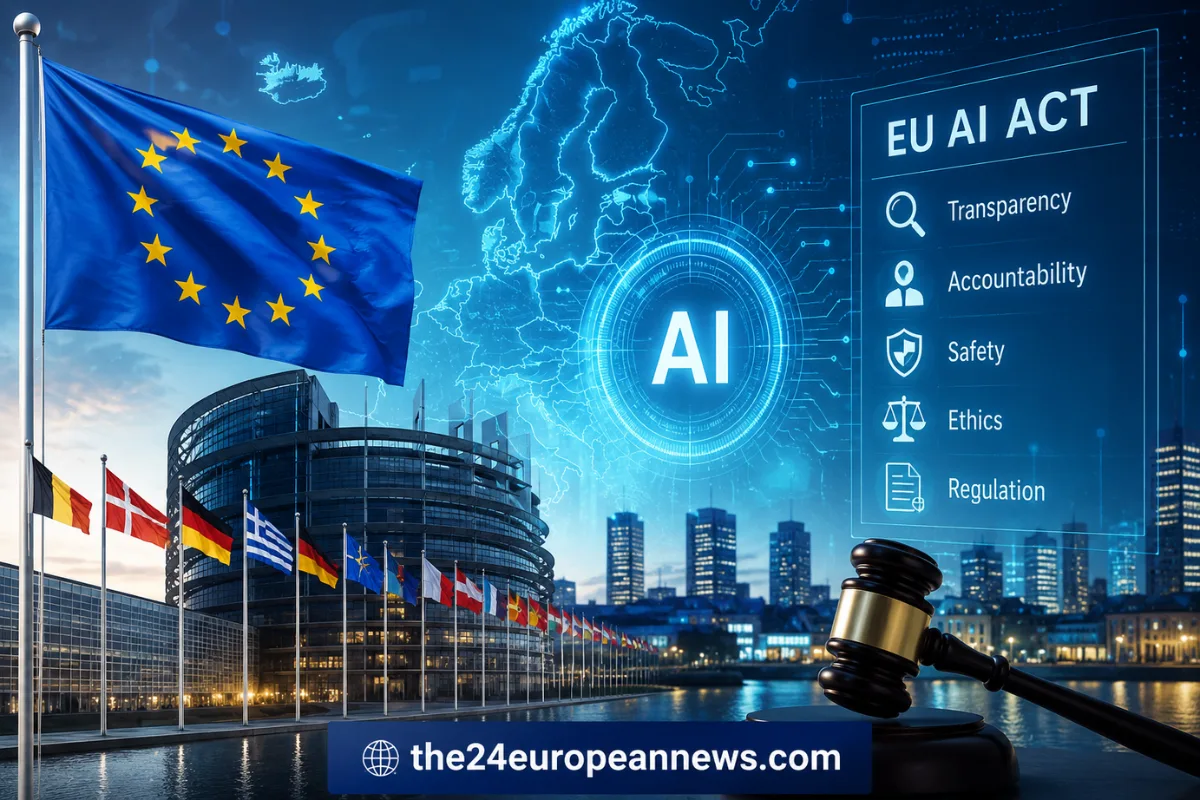
Europe’s AI story has entered a new phase. As of August 2026, the European Union is moving from debating artificial intelligence rules to enforcing them in daily business and digital life. For readers following AI News Europe, the biggest change is the arrival of transparency duties under the EU AI Act, alongside fast growth in business adoption and pressure on technology companies to prove that their systems are trustworthy.
What changed in Europe’s AI rules this month?
The most immediate change is that Article 50 transparency obligations under the EU AI Act began applying on August 2, 2026. The European Commission says these rules help people recognise when they are interacting with AI or viewing AI-generated or manipulated content. Providers must make certain AI outputs identifiable, while people may need to be informed when they interact with AI systems or encounter specific biometric or emotion-recognition uses. (source: European Commission)
Why is AI transparency becoming such a big issue?
The answer is simple: trust. A convincing AI-generated image, video, voice clip or article can look real even when it is not. That creates problems for consumers, journalists, businesses and public institutions.
For ordinary users, the message is straightforward. Online services should increasingly give clearer signals about AI involvement. Companies are expected to use appropriate disclosure and technical measures depending on the system and use case.
Are European AI companies gaining momentum?
Yes, and that is another theme in current AI News Europe coverage. Europe is trying to build its own AI industry while creating rules for powerful technologies.
French AI company Mistral AI remains watched as Europe seeks stronger technological capacity inside the continent.
European businesses are also adopting AI faster. Eurostat reported that 20% of EU enterprises with at least 10 employees used AI technologies in 2025, up from 13.5% in 2024. Denmark, Finland and Sweden recorded the highest adoption rates. (source: Eurostat)
What does the EU AI Act mean for businesses?

The answer depends on the type of AI system. The AI Act follows a risk-based approach, so not every tool faces the same obligations.
Some AI uses are minimal or low risk and face limited requirements. Higher-risk systems face stronger duties around risk management, data quality, documentation, human oversight, cybersecurity and accuracy.
There is also an important timeline change. Following the 2026 AI Omnibus agreement, certain high-risk obligations have later application dates. The European Commission says rules for high-risk systems in areas such as employment, education, migration and border control will apply from December 2, 2027, while high-risk AI embedded in regulated products has a later date of August 2, 2028.
For companies, the smart response is preparation. Businesses using AI should identify their systems, understand their risk category, document how tools are used and check employee AI literacy.
[insert related article link here]
Could Europe’s AI rules affect companies outside Europe?
Yes. This is one reason AI News Europe matters to a global audience.
A company does not necessarily need to be headquartered in the EU for European rules to matter. Applicable requirements can influence product design, documentation, disclosures and compliance work.
That can create a wider “Brussels effect,” where European rules influence products elsewhere. Global companies may prefer one standard rather than separate versions for different regions.
The effect is already visible in industry decisions. Anthropic announced machine-readable watermarks for text and files generated by Claude in response to European transparency requirements, with the approach applying globally to models launched in the EU after August 2, 2026.
Is Europe trying to slow down AI innovation?
Not exactly. The EU is trying to balance innovation with safeguards, although the debate remains intense.
Supporters say clear rules can increase confidence and provide a predictable framework. Critics worry compliance costs could hit startups harder than large technology companies.
The 2026 AI Omnibus changes show Brussels is responding to those concerns. The European Commission says the package simplifies implementation, expands some support for smaller companies and gives more innovators access to regulatory sandboxes.
That balance will be crucial, and it will remain a theme in AI News Europe coverage. Europe wants AI companies to build, invest and hire locally, but it also wants systems that people can trust.
What should consumers watch next?
Consumers following AI News Europe should watch three areas: disclosure, content authenticity and everyday AI use.
Expect clearer signs that a chatbot, image, video or other digital experience involves AI. Companies will face growing pressure to explain how synthetic content is identified.
For readers, pause before sharing surprising content. Check the original source and context; a realistic voice or image does not prove something happened.
What happens next for Europe’s AI industry?
The next stage will focus on enforcement and implementation. Regulators will need clear guidance, companies workable compliance systems, and users will judge whether transparency improves trust.
Europe also faces a competitive challenge. Regulation alone cannot create a successful AI industry; the region needs computing capacity, investment, skilled workers, research and globally competitive companies.
The latest AI News Europe developments therefore point to a broader story: Europe is trying to become both a major AI market and a rule-setting power. Whether it can combine those roles successfully will shape its digital economy for years.
What is the latest AI news in Europe?
The EU’s AI Act transparency rules began applying on August 2, 2026, increasing disclosure duties for certain AI systems and generated content.
What is the EU AI Act?
The EU AI Act is a risk-based law that sets rules for developing and using artificial intelligence across the European Union.
Does the EU AI Act affect companies outside Europe?
It can, because companies serving the EU market may have to meet applicable requirements even when headquartered elsewhere.
How many EU businesses use AI?
Eurostat reported that 20% of EU enterprises with at least 10 employees used AI technologies in 2025.
Will Europe’s AI rules change how consumers use AI?
They are expected to make AI involvement more transparent, helping users recognise when they interact with AI or encounter certain AI-generated content.
Comments (0)
Be the first to comment.